

Home repairs · Chico, California
Drywall Cracks: Repair the Finish or Investigate First?
Learn when a drywall crack may need a straightforward finish repair and when recurring movement or moisture needs investigation before patching.
By Diamond Handyman Service
Published
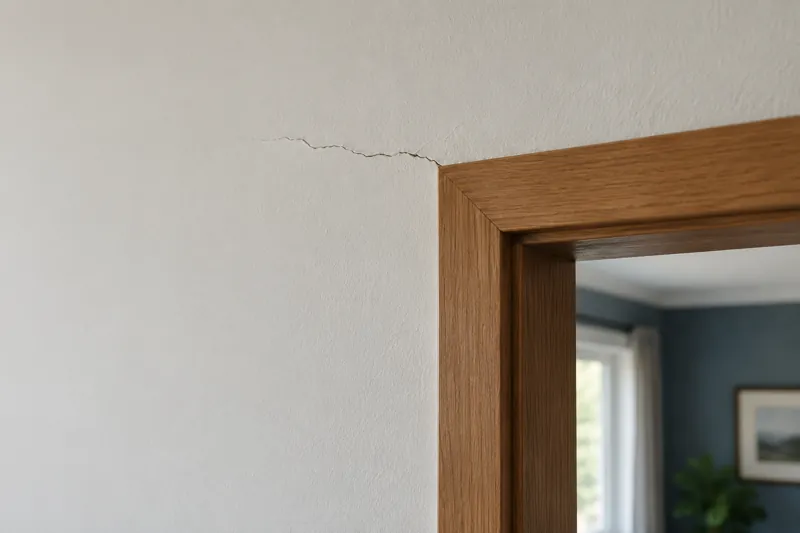
A drywall crack can be a small finishing problem, but its appearance alone cannot establish the cause. The useful first questions are whether it is new, whether it is changing and whether moisture or other movement is present. That approach keeps a Chico drywall repair focused on the actual wall instead of covering a symptom repeatedly.
What a finish repair can address
An isolated surface defect, failed joint finish or small area of impact damage may be suitable for patching and refinishing once the backing is sound. The repair method depends on the defect: filling a shallow mark is different from reinforcing a failed seam or replacing a damaged section.
Simply smearing compound along a recurring crack may leave the reason it opened untouched. Loose material needs appropriate removal, and the patch needs support where required. Our drywall repair and patching service covers the finishing work after the condition is understood.
When the cause needs attention first
A stain, damp patch or soft surface calls for checking the moisture source. If a crack changes noticeably, returns after repair or appears alongside movement in doors and floors, arrange an appropriate assessment before treating it as cosmetic. A photograph cannot rule out a structural issue, and no single crack-width rule diagnoses every building.
Do not assume a house’s neighborhood or age explains the damage. Chico properties differ in construction and maintenance history. What matters is the condition in this particular room and whether that condition is stable.
Texture and paint are part of the repair
A smooth patch can remain obvious on a textured wall. Matching the surrounding finish takes a separate step, and even a close texture match can catch light differently. Existing paint may also have faded or changed sheen. Discuss whether the finish should stop around the repair or extend across the wall for a more consistent appearance.
Allow the chosen repair materials to dry as directed before priming and painting. The USG patch-and-repair product information is one example of why material selection and instructions matter; products are not interchangeable in every condition.
Older surfaces need careful handling
Before disturbing older painted finishes, consider lead-safe requirements. The EPA’s renovation guidance explains why sanding and demolition need more thought than covering a small nail hole. Suspect hazardous materials require the appropriate specialist.
## Nail pops, open seams and impact holes are different repairs
A small raised spot around a fastener is different from a crack following a taped joint. Covering either with a thick dab of compound can leave a visible bump without correcting the loose attachment or failed joint treatment. The repair needs to suit what has separated and whether the surrounding board is sound.
An impact hole may need a supported patch instead of surface filler. Damaged corners may involve the corner bead beneath the finish. These distinctions explain why two marks of similar size can require different work. The goal is a stable surface that can be finished flush, rather than simply making the opening disappear for a photograph.
Why a finished patch can still show
Texture, surface porosity, paint color and sheen all affect the result. Fresh joint compound absorbs paint differently from a previously painted wall unless it is prepared appropriately. A smooth patch in an otherwise textured wall can remain visible even under matching paint.
Lighting matters too. Daylight from a nearby window can reveal a ridge that was difficult to see under a ceiling light. Depending on the existing finish, painting to a natural boundary or repainting the wall may give a more consistent result than a small touch-up. That choice can be discussed before finishing starts. Drying between stages is part of the work; a larger repair is not necessarily ready for final paint during the same visit. See small home improvements for coordinating wall repairs with other finishing work.
What should you tell us?
Describe where the damage is and whether it has returned or been wet. A photo helps, but you do not need to diagnose the wall or complete a checklist before calling. If a nearby door is also rubbing, mention it; our sticking-door guide explains why that symptom also deserves its own inspection.
Tell us about your project.
Call or text (530) 250-5382. You can text project photos to that number or email info@chicohandymanservice.com. Free estimates within Chico city limits.
Contact Diamond