

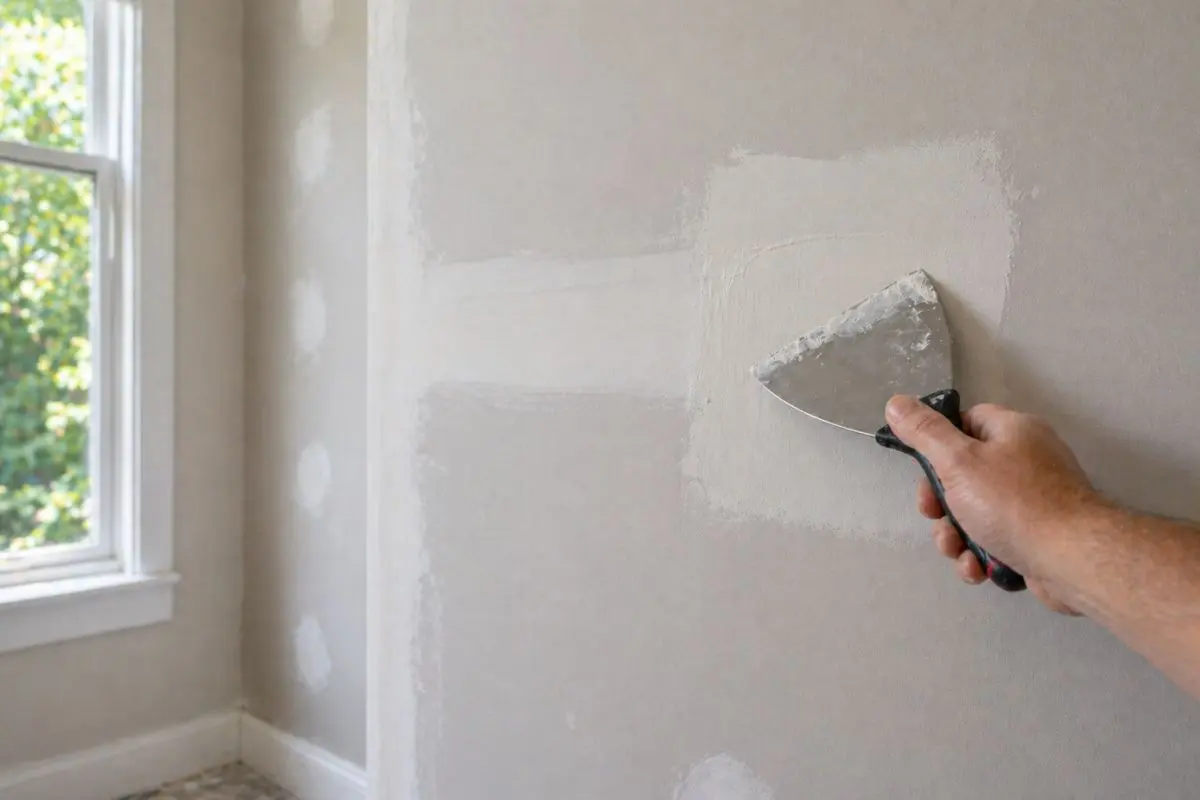
Careful work. A finished surface.
Drywall repair & patching in Chico, CA.
Holes, damaged corners, nail pops and small wall repairs in Chico. We pay attention to the patch and the surface around it.
Free estimates within Chico city limits.
Diamond Handyman Service
Drywall repair that considers the whole finish.
A doorknob hole, pulled TV bracket or rough patch can stand out long after the original accident. Diamond Handyman Service provides drywall repair and patching in Chico for homes, rental properties and small commercial spaces. The work can include a single damaged spot, several rooms of anchor holes, a broken corner or a localized section that needs new board.
The goal is a stable repair with a finish that belongs in the room. That means considering the board, attachment, seams, texture and paint together. Filling a hole is only one part of the work; a proud patch, mismatched texture or unprimed surface can remain visible even after painting. We explain what the repair includes and where a wider finishing area would improve the result.
Holes, anchors and damaged corners.
Small fastener holes and a damaged section of board need different repairs. A hole left by a picture hanger may need localized filling, while a doorknob impact can crush the paper and gypsum beyond the visible opening. We work back to sound material and choose a patch with appropriate support instead of covering a weak area with a thick mound of compound.
Old TV mounts, shelves and curtain hardware can leave several holes close together. Treating the affected area as one repair can give a flatter finish than building a separate raised spot around every anchor. Where a corner has been hit, we check the corner bead as well as the surface coating; bent or loose reinforcement needs attention before the finish goes back on.
Cracks and fastener pops need a different approach.
A recurring crack may involve loose tape, movement at a joint or an issue beyond the finish. We look at where it runs and how the surrounding surface behaves before choosing the repair. Simply filling the visible line may leave the same weak seam underneath. Loose or damaged tape can require removal and replacement across a wider area.
Nail and screw pops are also more than small cosmetic bumps. If the board is moving at a fastener, the attachment needs attention before the surface is refinished. Cracks that keep changing, widespread movement or other signs of a larger building problem should be evaluated further rather than hidden under a fresh finish.
Match the texture, then plan the paint.
Orange peel has a fine, scattered pattern; knockdown has flatter, irregular islands. Skip trowel is hand applied, while a smooth wall exposes small changes in flatness. These finishes require different blending techniques. The size, spacing and density of the existing texture matter as much as the label used to describe it.
A good blend usually extends beyond the original damage. Feathering the patch edge gives the compound room to transition into the wall, and the texture needs to continue that transition. On smooth surfaces, light from a nearby window can reveal ridges that overhead room lighting does not. We consider how the repaired surface will actually be seen.
Primer and paint are separate finishing stages.
Drywall compound is more absorbent than a painted wall. Primer helps prepare the repaired surface for paint, but primer alone will not match the existing color or sheen. We discuss patching, texture, priming and any painting as defined parts of the job, so the finished scope is clear.
Even the original paint can look different against a wall that has aged or been cleaned repeatedly. A small touch-up may be enough in some rooms; in others, painting to a corner or across the wall gives a more consistent appearance. We aim for a careful blend without promising that every repair will be invisible in every light.

Water damage and older plaster.
Staining, soft board or a swollen ceiling can point to a moisture problem. The water source and the condition of the material determine what happens next. A dry stain on sound board is different from softened drywall that has lost its strength. Damaged material may need replacement, and an active leak must be addressed before closing the area.
Rebuilding the visible surface is not a substitute for resolving a roof, plumbing or other moisture problem. If the affected area suggests concealed damage or a remediation issue, that changes the work required. We explain those limits before covering a wall that needs more attention behind it.
Preserve the surface that is already there.
Plaster and lath do not behave exactly like drywall. Loose plaster, shallow surface damage and a hole through the backing can each call for a different repair. We assess the existing material and its attachment rather than assuming a standard drywall patch is suitable for every older wall.
For rental turnovers, wall repairs can be grouped with other make-ready work. Mounted fixtures, shelves and door hardware often leave damage in several rooms. We can discuss those areas together and coordinate the repair stages with the intended painting schedule, without requiring you to identify every texture or diagnose the wall first.
A clear scope
Allow the repair to dry properly.
Compound, texture and primer each have their own drying requirements. Repair size, product choice, temperature and the condition of the room affect the schedule. Some small repairs fit into one visit; layered repairs may need a return trip. Rushing the next coat over material that is not ready can compromise the finish.
We discuss the likely stages before work begins and protect the immediate work area during patching and sanding. If your project combines wall repairs with trim or carpentry, the order of those tasks matters too. One conversation can cover the related work.
Useful answers
A few things you may be wondering.
Can you repair just one hole?
Yes. A single doorknob hole, pulled anchor or damaged corner is a valid project. We also handle several repair areas together. You can call, text or email to describe the problem; photos are helpful if you want to send them, but you do not need to diagnose it before contacting us.
Can you match orange peel, knockdown or skip-trowel texture?
We work with those finishes as well as smooth walls. Matching depends on the existing pattern, the condition of the surrounding surface and the space available to blend. We explain the expected result, including whether extending the texture or paint beyond the patch would improve the appearance.
Does the whole wall need new drywall?
Usually a localized repair can be considered when the surrounding board is sound. Larger damage, loose material or moisture problems can change that. The decision is based on the condition and support of the wall, rather than replacing good material automatically or trying to save material that is no longer suitable.
Will a crack come back?
No repair can prevent movement elsewhere in a building. If a crack comes from a loose taped joint, repairing that joint addresses a different problem from an actively moving wall. We consider the cause and explain when the issue appears to need more than surface patching.
Do you handle ceiling patches and plaster?
Localized ceiling repairs and plaster damage can be assessed along with wall repairs. Access, the condition of the surrounding surface and the cause of the damage affect what is appropriate. A damp, sagging or extensively loose ceiling needs a different response from a small, dry cosmetic patch.
Is painting included with drywall repair?
The finishing scope is agreed for the particular job. Patching, texture, primer and finish paint are distinct stages. We make clear where our work ends and whether a paint touch-up or a larger painted area is needed to achieve the appearance you want.
Helpful resources
Related guidance from trusted sources.
These independent resources provide additional information related to this page.
Easy to get started
Tell us about your project.
Ready to take care of that wall damage? Call or text and we’ll help.
If you’d like to send photos, email info@chicohandymanservice.com or text (530) 250-5382.