

Home repairs · Chico, California
Bathroom Caulk vs. Grout: Which Joint Needs What?
Understand the difference between bathroom caulk and grout, why joints fail and when a tub or shower needs more than a new surface bead.
By Diamond Handyman Service
Published
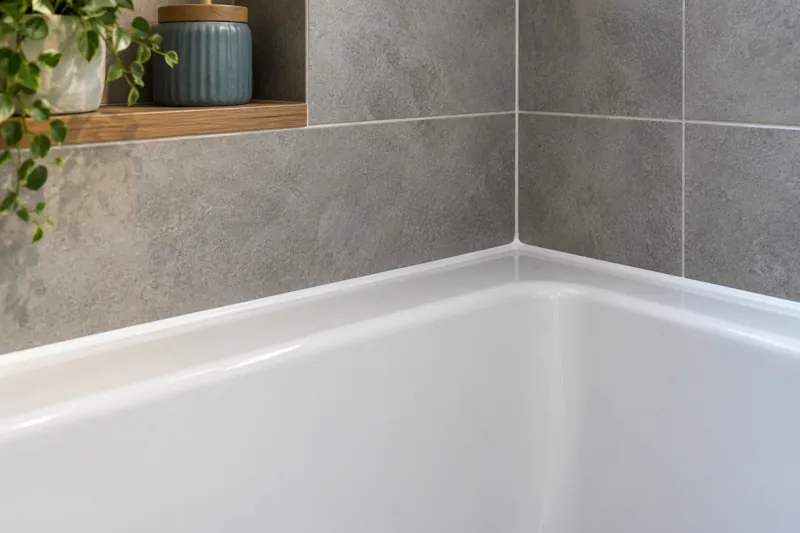
Caulk and grout serve different purposes. Grout fills the joints between tiles in a tile field. A suitable flexible sealant is often used at changes of plane and transitions between materials, according to the installation system. Using one material everywhere can create a repair that looks tidy at first but does not suit the joint.
Look at the joint, not just its color
The line between two tiles on a flat wall is different from the corner where two walls meet or where tile meets a tub. Movement, joint dimensions and the materials on each side affect the appropriate product. A color-matched tube may resemble grout without having the same properties.
Tile systems may also use purpose-designed movement profiles. Follow the system requirements. For example, Schluter’s shelf-to-wall guidance addresses flexible sealant at that specific transition; it is not a universal specification for every bathroom joint.
Why a fresh bead can fail
New material needs a suitable surface. Loose old sealant, soap residue and moisture can interfere with adhesion. Applying another layer over a failing bead may hide separation without correcting it. Product compatibility, joint preparation and curing requirements all matter.
A clean application should have a consistent profile and contact with the joint edges. Excess material spread across surrounding tile is not extra protection. The aim is an appropriate joint, not the widest possible stripe. Our caulking service includes discussing the actual surface and condition.
Cracked grout needs its own assessment
A small damaged grout area may be repairable, but repeated cracking, loose tile or movement underneath can require more investigation. Filling over loose material is unlikely to provide a sound finish. Matching grout also involves type, joint width and color; an old installation can look different even when a nominal color matches.
Read about tile and grout repair if the issue is within the tiled surface. If several tiles are moving, describe that when you call rather than treating it as only a color touch-up.
Surface sealing is not waterproofing repair
A neat bead does not repair a leaking pipe, failed shower pan or damaged waterproofing behind the tile. A damp wall, soft floor or recurring stain needs attention to its source. Avoid repeatedly sealing over symptoms while water continues to enter the building.
## Sanded-looking sealant can be mistaken for grout
Appearance is not enough to identify the material in a joint. Some flexible sealants are made to resemble grout, while old caulk can become hard, discolored or brittle. The location of the joint and the installation requirements matter more than whether its color matches the tile.
A transition where surfaces move differently often needs a flexible treatment suited to the assembly. Filling that space with a rigid material can lead to recurring separation. Conversely, smearing caulk across damaged grout throughout a tiled area does not rebuild the grout joints or correct loose tile. The right repair begins by identifying which material has failed.
What about black spots or staining that comes back?
Discoloration may be on the surface or within deteriorated sealant. Cleaning can improve some surface marks, but badly separated or degraded material may need removal and replacement. A fresh outer bead will not solve moisture trapped behind an old failed joint.
If the area stays wet, a musty odor persists or nearby material is swollen, investigate the moisture source before cosmetic resealing. Normal ventilation and drying help maintain the bathroom, but they do not repair concealed water entry. Product instructions govern cleaning compatibility and curing; aggressive cleaners can damage surrounding finishes. For a broader view of moisture-related repairs, see common home repair problems.
How soon can the shower be used?
That depends on the selected product and conditions. Follow its actual water-exposure and curing instructions; touch-dry does not necessarily mean ready for a shower. We can discuss the expected interruption before work begins. For a Chico bathroom, send a photo of the joint or simply tell us where it is separating. You do not need to know whether the existing material is silicone or grout before asking for help.
Tell us about your project.
Call or text (530) 250-5382. You can text project photos to that number or email info@chicohandymanservice.com. Free estimates within Chico city limits.
Contact Diamond