

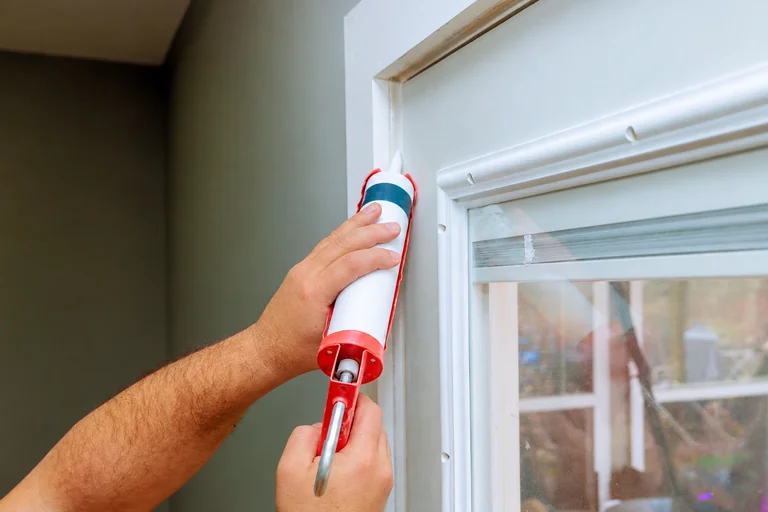
Clean edges. A better fit.
Caulking & weatherstripping in Chico, CA.
Refresh tired tub joints, worn door seals and gaps around everyday surfaces. Caulking and weatherstripping help for Chico homes and rentals.
Free estimates within Chico city limits.
Diamond Handyman Service
Clean joints. Better-fitting seals.
Separated tub caulk, a draft beneath the front door or a cracked exterior joint can be a small repair worth handling before it becomes a bigger frustration. Diamond Handyman Service provides caulking and weatherstripping in Chico for bathrooms, kitchens, doors, operable windows and exterior trim. We match the material and repair to the opening or joint involved.
Caulk seals appropriate stationary joints; weatherstripping seals around moving components that still need to open and close. Those jobs overlap, but the products are not interchangeable. A door may need an alignment correction as well as a new seal, while a leaking joint may need attention to the material behind it. We look at the problem before covering it.
Bathroom and kitchen recaulking.
The joint around a tub or where a backsplash meets a counter sees different conditions from a painted baseboard. Water exposure, cleaning products, the adjoining materials and movement at the joint all affect product selection. The sealant needs to be compatible with the surface and intended use, including delicate or natural-stone finishes.
Renewing a failed bead involves removing the deteriorated material, cleaning the bonding surfaces and allowing the joint to be ready for the new product. Soap residue and old sealant can interfere with adhesion. A fresh bead applied over a loose or contaminated one may look tidy at first while leaving the original problem underneath.
A clean finish needs a sound joint.
Cracked, missing or separated caulk can be renewed, but recurring wetness or soft material nearby may require more than a bead of silicone. If a tub moves, a sink is loose or the surface behind the joint is damaged, that condition can affect the repair. We discuss it before treating the issue as cosmetic.
A neat line should also suit the joint width and shape. Larger gaps may require a different joint design or a repair to the surrounding material rather than an oversized bead. We use the product requirements to guide the application and explain when the area can be exposed to water again.
Door seals that still let the door work.
Flattened, torn or missing weatherstripping can leave gaps around an exterior door. The replacement needs to fit the frame profile and compress enough to seal without preventing the door from closing and latching. Kerf-in seals, adhesive-backed products and other profiles are not universal substitutes for one another.
Uneven gaps can also come from a sagging door or hardware that is out of adjustment. Fitting thicker material everywhere may make that door harder to use while leaving the underlying issue. We consider the fit of the slab and frame along with the seal, and can discuss related door hardware repairs where needed.
Sweeps, thresholds and window weatherstripping.
The bottom of a door may use a sweep, a replaceable bottom seal or a threshold system. The right part depends on the door and how it meets the floor or sill. We look at clearance through the opening as well as the closed position so the new seal does not drag unnecessarily or interfere with operation.
Operable windows also use different seals according to their design. Sliding, hinged and vertically moving windows do not necessarily accept the same replacement material. We assess compatibility and keep intended drainage paths functional. Garage-door bottom seals can also be considered where the retainer and door condition allow a suitable replacement; spring, cable and door-mechanism work is a separate specialty.
Exterior joints need the right treatment.
Exterior trim, window perimeters and appropriate wall penetrations can have failed sealant that needs renewal. Exposure, movement and the adjoining materials matter when selecting a product. We consider whether the existing joint is meant to be sealed and whether deteriorated trim or another defect needs repair first.
Some exterior openings are drainage or ventilation features, and they must remain open. A broad application of caulk is not a substitute for flashing or another wall-system detail. When a leak comes from beyond the visible joint, a new bead alone may not resolve it. Related stucco or wood trim repair may be needed.
Paintable trim and wet-area sealant differ.
Interior trim caulking finishes appropriate gaps at baseboards, casing and molding. A paintable product can provide a clean transition to the wall, but the trim should be secure first. Sealant is not a replacement for fastening a loose piece or fitting a joint that has an excessive gap.
A product suited to a painted dry-area joint may not be suitable for prolonged wet-area exposure. Likewise, many silicone products do not accept ordinary paint. We consider the final finish before selection. The right choice depends on the product specifications and the actual location, not simply whether the tube says it is a general-purpose caulk.

A clear scope
Handle one troublesome joint or a coordinated refresh.
One tub, a single door or several openings around the property can be discussed in the same way: what is failing, what condition is underneath and what material will fit. Seals should be replaced when their condition calls for it; there is no single replacement interval that applies to every product or exposure.
Caulking and weatherstripping can also be part of a rental turnover. We can address worn seals and deteriorated bathroom joints alongside other small repairs. Reducing air leakage can improve comfort, but a seal repair is not a promise of a particular energy-bill reduction. Free estimates are available within Chico city limits.
Useful answers
A few things you may be wondering.
Do you remove the old caulk?
For a failing joint being renewed, deteriorated caulk and residue need to be removed as appropriate so the new product can bond to sound surfaces. The joint is cleaned and readied for the replacement. Simply hiding a loose bead beneath more material leaves the weak layer in place.
Can you recaulk a tub or shower without replacing tile?
Often, yes, when the adjoining material is sound and the issue is the flexible joint. Loose tile, soft backing, persistent moisture or movement can change the scope. We assess those conditions before assuming a new bead will solve the problem.
Will new weatherstripping make my door hard to close?
Correctly selected material should suit the opening and its compression requirements. If the door already has uneven gaps or latch problems, adjustment may be needed first. A seal that is too thick is not automatically a better seal.
Do you replace door sweeps and window seals?
Yes, we can assess compatible replacement seals at exterior doors and operable windows. The style and available replacement parts matter. We check how the opening functions and preserve its intended drainage rather than applying the same strip to every frame.
How soon can I use a shower after recaulking?
That depends on the sealant, joint and site conditions. Products have specific requirements before water exposure, and a surface that feels dry may not be ready for use. We explain the timing for the material applied to your shower.
Will sealing a joint stop an exterior leak?
It may help when failed sealant at that joint is the source, but not every leak starts at the visible gap. Flashing, drainage or other defects can require separate work. We explain what the localized sealing work can address and when further investigation is needed.
Helpful resources
Related guidance from trusted sources.
These independent resources provide additional information related to this page.
Easy to get started
Tell us about your project.
Need a fresh seal or a better-fitting door edge? Call or text us.
If you’d like to send photos, email info@chicohandymanservice.com or text (530) 250-5382.