

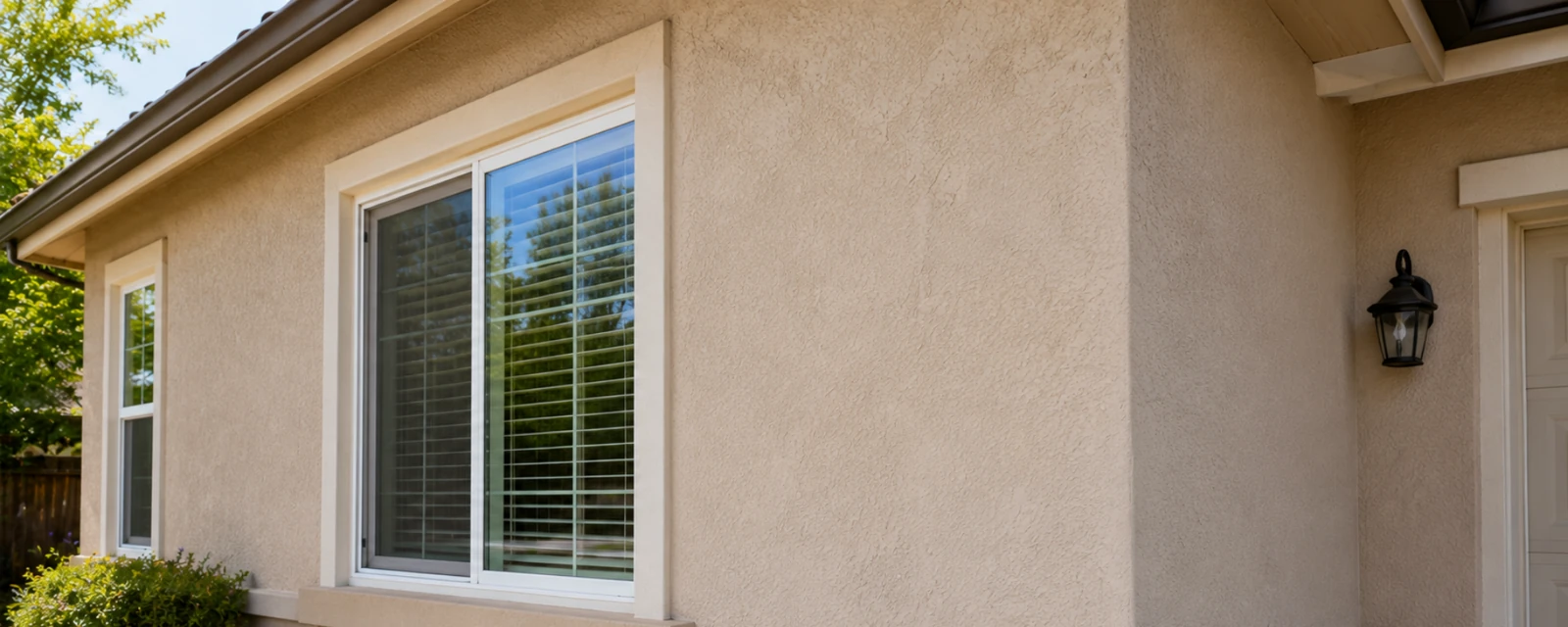
A better finish outside
Stucco repair in Chico, CA.
Small cracks, fixture holes and localized stucco damage repaired with attention to the wall around them. Exterior repair help in Chico and nearby communities.
Free estimates within Chico city limits.
Diamond Handyman Service
Restore the exterior without disguising the problem.
Stucco repair should address the damaged area and the finish around it. Diamond Handyman Service handles localized stucco repairs in Chico, including small cracks, fixture holes, impact damage and chipped corners. We consider the existing wall material, the condition underneath and the texture you will see when the work is complete.
A hole left by an old mounting bracket is a different project from a bulging section near a window. One may need a small supported patch; the other may point to moisture or attachment problems behind the surface. We explain the practical repair options before starting, including situations where a stucco specialist or further investigation is the right next step.
Fixture holes, chips and impact damage.
Removing a satellite dish, exterior bracket or unused attachment can leave more than a few screw holes. The mounting area may include cracked edges, loose finish or an opening through several layers. We assess how far the damage extends and whether backing or reinforcement is needed to support the repair.
A shallow chip can be treated differently from a deeper impact. The goal is to rebuild the missing material with products compatible with the existing wall, then carry the finish into the surrounding surface. Filling the face of an opening without accounting for its depth can leave a fragile spot that looks repaired but is poorly supported.
Corners and transitions deserve close attention.
Outside corners, garage openings and exposed edges can lose their shape when struck. If the reinforcement below the finish is damaged or loose, adding texture alone will not restore a crisp, stable corner. We assess the edge itself and the material next to it before rebuilding the visible profile.
Where stucco meets window trim, door trim or another material, the joint has to accommodate how those parts connect. Some joints need a compatible flexible sealant rather than a rigid patch. Existing drainage details must also remain functional; covering every opening with sealant is not the same as repairing a wall correctly.
A crack needs context.
Cracks differ in pattern, location and whether they are changing. A fine surface crack, a split beside an opening and a crack that has reopened through an earlier patch should not automatically receive the same treatment. We look at the surrounding finish and any related symptoms before deciding whether a localized repair is appropriate.
Crack width alone does not establish the cause. We do not describe a crack as harmless or structural from a photograph or a single measurement. Ongoing movement, widespread cracking or changes around doors and windows may call for a qualified assessment before cosmetic work. A patch can improve a damaged finish; it cannot stop movement elsewhere in the building.
Moisture changes the repair scope.
Bulging, separation, repeated staining or soft adjacent wood can indicate a problem beyond the finish coat. White mineral deposits can be associated with moisture movement, but they do not identify the source on their own. An active water problem needs attention before a repaired surface is expected to last.
The cause might involve an opening, flashing, drainage or a detail outside the patch area. We discuss what is visible and what remains uncertain. When underlying material is compromised, a surface-only repair would leave the important work unfinished. Larger concealed damage or a wall-system problem may need specialist work before we handle a small finish repair.
Texture gives stucco its character.
Sand finishes, rough dash, lace patterns, flattened knockdown textures and smooth finishes each reflect light differently. A patch with the correct color can still stand out if its aggregate, pattern or relief is wrong. We use the surrounding wall as the reference rather than making every repair the same smooth rectangle.
Matching involves the transition as well as the middle of the patch. The repair boundary needs room to blend, and the application method must suit the existing finish. Older hand-applied textures can vary across a single wall. The aim is a considered match with realistic expectations, especially where a small repair catches strong side lighting.
Color and coating are another part of the finish.
New material can look different from aged stucco even when it begins with a similar color. Existing coatings, sun exposure, previous touch-ups and surface staining all affect the match. We discuss whether the repair needs a compatible coating and how much surrounding area should be included.
Sometimes a localized touch-up blends well; sometimes finishing to a natural edge produces a more consistent wall. We explain those options before work begins. An exact invisible match is not something to promise for every old exterior, and a fresh coat of paint does not correct a texture mismatch underneath it.
A clear scope
Repair stages should suit the wall and the weather.
Stucco patching may involve separate base, finish and coating stages. Product instructions, repair depth and weather conditions determine when the next stage can proceed. A surface that feels dry is not automatically ready for paint. We plan the work around those requirements instead of promising the same completion time for every repair.
One small area or several spots around the property can be considered together. Related exterior caulking or trim repairs may also be part of the project. Full-wall resurfacing, extensive structural work and specialist exterior insulation systems require a different scope from a localized handyman repair.
Useful answers
A few things you may be wondering.
Can you patch holes left by a satellite dish or bracket?
Yes. We assess the size, depth and condition around the old mounting points. A shallow fastener hole needs a different repair from an opening through the wall layers. Texture and the final coating are discussed along with the patch itself.
Can you match the existing texture and color?
We work toward a close blend with the existing wall. Texture and color are separate considerations, and weathered surfaces can limit an exact match. A wider coating area may produce a better result than a small spot touch-up. We explain that before completing the finish.
Does every stucco crack mean a foundation problem?
No, but the cause should not be assumed from width alone. Location, pattern, movement and associated damage all matter. If the symptoms suggest something beyond a localized surface repair, further assessment is appropriate before patching. We do not provide a structural diagnosis as part of a cosmetic repair.
Can damaged stucco near a window be repaired?
Localized damage can be assessed. We also consider the transition to the window and any signs of moisture. If a leak or flashing problem is contributing, that needs to be addressed rather than hidden with fresh stucco or a large bead of caulk.
Will the work be finished in a single visit?
That depends on the material and repair. Some small work has fewer stages, while deeper repairs need time between applications and before coating. We explain the likely schedule for your wall and account for product requirements and weather.
Do you repair large sections or entire stucco walls?
Our focus is localized repair. If the project involves extensive loose material, major underlying damage, full-wall replacement or a specialist wall system, we will explain why it needs a different scope. You can call or send an optional photo to start the conversation.
Easy to get started
Tell us about your project.
Have a spot on the exterior that needs attention? Call or text us.
If you’d like to send photos, email info@chicohandymanservice.com or text (530) 250-5382.