

Installation guides · Chico, California
Ceiling Fan Wobble & Noise: What Needs Checking?
Understand common ceiling fan wobble and noise issues, why mounting support matters and when to stop using a fan and call an electrician.
By Diamond Handyman Service
Published
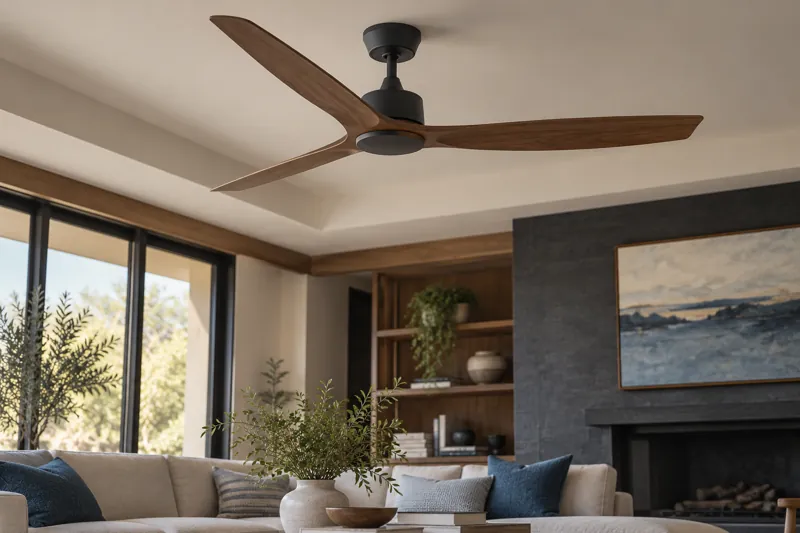
A ceiling fan should not be ignored when it starts moving noticeably or making a new sound. Dust, loose components and blade imbalance can contribute, but mounting and electrical problems need a different response. Stop using a fan that appears loose or unstable until the cause is checked.
Separate vibration from electrical symptoms
A click once per rotation, a loose light cover and a hum are not the same fault. Note whether the sound changes with speed and whether it began after a repair or installation. Do not reach toward moving blades to investigate.
Burning smells, crackling, damaged wiring or repeated electrical trips call for stopping use and contacting a qualified electrician. Do not open electrical connections as a casual troubleshooting step. Hunter’s fan support guidance distinguishes several common symptoms and directs users to model-specific help.
Check the whole assembly before balancing
A balancing kit addresses a balance problem; it cannot make an insecure mounting point suitable. The support, bracket and installed components must be appropriate for the fan. A light-fixture box is not automatically rated to support a ceiling fan.
Blades and their attachments also need to match the model. A replacement that looks close may have a different shape or weight. Follow the manufacturer’s instructions for parts and adjustments rather than bending components or mixing unrelated blades.
Cleaning and condition matter
Uneven buildup can affect operation. Cleaning must be done with the fan off and fully stopped, using safe access and the product’s care instructions. A high ceiling or awkward stairwell may require different equipment from an ordinary room.
If blades are damaged, the canopy is moving or parts are loose, those conditions should be addressed before running another test. The absence of noise at one speed does not by itself prove the installation is sound.
Repair or replacement?
Repair may make sense when the support is suitable and the issue is an available, identifiable part. An older fan with damaged components or unavailable parts may be better replaced. Replacement still requires checking the support and electrical arrangement; a new fan does not correct those automatically.
For Chico homes, see our ceiling fan service page. The actual work determines whether it fits handyman scope or needs a licensed electrician and permits. We do not treat all electrical work as a simple swap.
## When does the sound happen?
A repeating click as the blades turn is different from a rattle that appears only at one speed or a hum associated with a control setting. Those observations can help narrow the assessment, but they are not a diagnosis. A rubbing cover, loose component, damaged blade or incompatible control can require different remedies.
Do not keep running a visibly unstable fan to gather more information. Switch it off and arrange an assessment. The useful description is simply what you noticed during ordinary use: when the sound began, whether it changes with speed and whether the light or controls also behave differently. You do not need to take the fan apart before calling.
Consider the room before choosing a replacement
A new fan needs appropriate clearances for its blades and height, a mounting arrangement suited to the ceiling and a product rating appropriate for the location. A fan intended for a dry indoor room is not automatically suitable for a damp covered outdoor space. Sloped ceilings and long downrods can also change which mounting components are required.
Controls deserve attention as well. Some fans use their own receiver or dedicated control system, so keeping an existing dimmer or wall control may not be appropriate. A qualified installer should follow the manufacturer's compatibility requirements and assess the support and electrical work. Choosing the finish and blade color comes after those essentials. For other warm-weather comfort improvements, see summer maintenance in Chico.
What information helps when you call?
Tell us whether the fan wobbles, makes noise or will not run. A photo and the model label, if readily available without unsafe access, can help. There is no need to climb up just to get a number before contacting us. If you have several smaller household jobs, we can discuss those in the same conversation.
Tell us about your project.
Call or text (530) 250-5382. You can text project photos to that number or email info@chicohandymanservice.com. Free estimates within Chico city limits.
Contact Diamond