

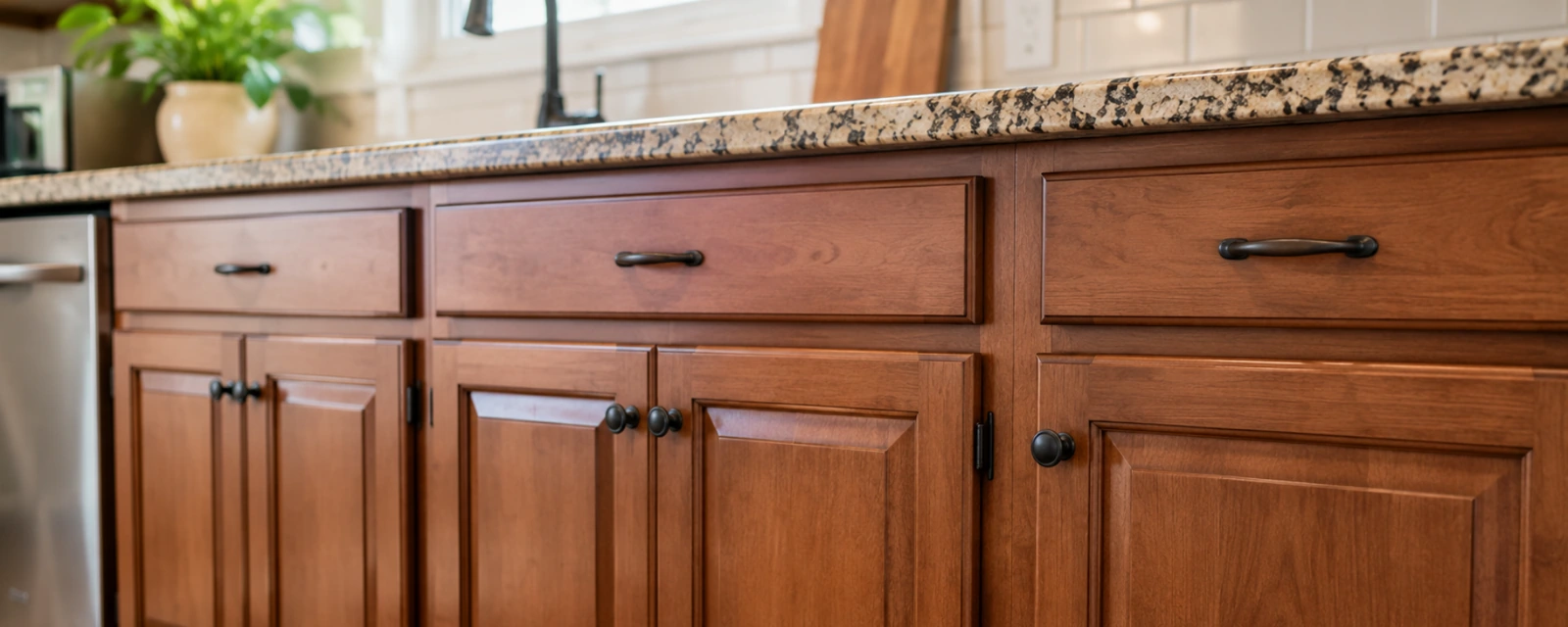
Better function for the cabinets you have
Cabinet repair in Chico, CA.
Sagging doors, sticking drawers and loose pulls can make a kitchen frustrating to use. We repair the details that keep your cabinetry working.
Free estimates within Chico city limits.
Diamond Handyman Service
Keep the cabinets. Fix what is wearing out.
A drawer that drops off its track or a door that hangs crooked can make an otherwise useful kitchen frustrating. Diamond Handyman Service provides cabinet repair in Chico for kitchens, bathrooms, laundry rooms and rental properties. We handle hinge and slide problems, door alignment, loose hardware and localized damage that does not require replacing an entire room of cabinets.
The cabinet box, door, drawer and hardware can each be in a different condition. Before recommending a replacement part, we look at what is actually failing and what it attaches to. A new hinge will not stay aligned if its mounting area is damaged, and a new slide cannot compensate for a drawer box that has come apart. The repair should address the cause as well as the symptom.
Doors that close cleanly.
A sagging cabinet door may have loose screws, damaged mounting holes or a worn hinge. It may also be rubbing because the door or surrounding cabinet is no longer square. We check the attachment and alignment together. Tightening an adjustment on a hinge that is pulling out of the cabinet will not create a lasting repair.
Concealed hinges vary by mounting style, overlay, opening angle and cabinet construction. Exposed hinges have their own dimensions and appearance to match. We identify the requirements before selecting replacements, then consider the gaps between neighboring doors and how they sit against the frame. The aim is a consistent row of doors that opens and closes without rubbing.
Restore a sound mounting point.
Hinge screws need material that can hold them. A stripped hole in solid wood is different from an area of crumbling particleboard or swollen MDF. Depending on the condition, repair can involve restoring the mounting area, using a suitable repair component or replacing a damaged part. Simply driving a longer screw is not appropriate in every cabinet.
A door that has come completely off can sometimes be rehung after its hinges and attachment points are repaired. If the door itself is split, warped or badly swollen, new hardware may not solve the problem. We explain which part can reasonably be saved and when a replacement door or larger repair would be more practical.
Drawers that glide instead of catch.
Binding drawers can involve worn slides, loose brackets, an out-of-square drawer box or a front that rubs its neighbors. We check the drawer and cabinet together before replacing parts. A drawer that opens unevenly may need alignment or attachment work, while damaged bearings or bent slide components may call for replacement.
Side-mount, undermount and other slide systems require different clearances and connections. Length, extension, load rating and the drawer construction all affect compatibility. A soft-close conversion may be possible, but it is not always a direct swap. We discuss whether the desired hardware fits the existing drawer or whether additional changes would be needed.
Drawer fronts and corner storage matter too.
A loose drawer front can make the whole cabinet look misaligned even when the slide works. Failed joints or a sagging drawer bottom can also interfere with operation. These problems deserve their own repair instead of adjusting the slide around a damaged box. We consider how the drawer will be used and what it is expected to hold.
Corner cabinets and Lazy Susan units add moving shelves, pivots and sometimes connected doors. A shelf that rubs may need an adjustment; a broken bearing or damaged support may need a replacement component. Access and parts availability affect the options. We check the full travel of the mechanism so the repair is useful in everyday use.
New hardware can change the room.
Replacing pulls and knobs can refresh a kitchen while preserving the cabinet layout. Like-for-like replacements can use existing holes when the spacing and fit match. A change from a knob to a pull, or between different pull sizes, may need new holes and a plan for the old ones.
The existing finish affects how well an unused hole can be concealed. Painted wood, clear-finished wood, laminate and thermofoil do not all accept the same touch-up. We discuss that before drilling. Consistent placement and enough clearance for fingers and neighboring doors are part of the installation, along with the visual choice of hardware.
Soft-close and small finish repairs.
Compatible soft-close hinges or drawer slides can reduce slamming and change how a kitchen feels. The hardware must suit the door size, cabinet style and clearances. We check the available options rather than promising every cabinet can take the same conversion kit.
Lifted edge banding, a damaged face-frame edge or a localized split may also be repairable. The condition of the underlying material determines whether the finish can be reattached or the section needs replacement. Decorative film that is peeling across a door is a different problem from one loose strip on an otherwise sound edge.
A clear scope
Repair the leak before rebuilding the cabinet.
Under-sink cabinet damage can follow a plumbing leak or repeated wetting. A bottom panel may be replaceable when the sides and supports remain sound. Swelling or deterioration throughout the box changes that decision. We consider how far the damage extends before adding a new panel over material that is no longer suitable.
The water source needs attention first. Plumbing repair and cabinet restoration are related but distinct tasks, and concealed damage can change the scope. A new liner does not repair a weakened cabinet. For a turnover, we can discuss cabinet work alongside the other repairs needed in the unit.
Useful answers
A few things you may be wondering.
Can you fix one broken drawer or cabinet door?
Yes. You do not need a whole-kitchen project. A single hinge, loose front, damaged slide or rubbing door is welcome. If several items have been bothering you, we can discuss them together without requiring a detailed inventory before you call.
Can the old cabinets stay if the hardware is worn out?
Often, yes. The important question is whether the box, door and mounting points are sound. Hardware repairs can restore function without changing the layout. Widespread water damage, severely distorted parts or a change in cabinet design may make replacement the more appropriate option.
Can you convert drawers or doors to soft-close?
We can assess compatible hinges, slides or other components. Fit depends on the cabinet style, available clearance and the existing drawer or door. Some conversions are straightforward; others require changes to the woodwork. We explain those requirements before choosing the hardware.
Can you replace the bottom of a sink cabinet?
Localized bottom-panel replacement can be possible after the leak is resolved. The surrounding sides, frame and supports need to be sound enough for the repair. If damage extends beyond the bottom panel, we discuss that instead of covering it with a new surface.
Will new pulls fit the existing holes?
They will when the mounting spacing and hardware dimensions match. Different spacing may leave old holes visible unless the finish can be repaired or the new hardware covers them appropriately. We check those details before committing to a hardware change.
Do you repair cabinets in rental properties?
Yes. Door alignment, broken hinges, loose pulls, drawer repairs and localized cabinet damage can be part of a rental turnover or a repair in an occupied property. Call, text or email to discuss what is not working; optional photos can help identify the style.
Easy to get started
Tell us about your project.
Ready to fix that cabinet door or drawer? Call or text us.
If you’d like to send photos, email info@chicohandymanservice.com or text (530) 250-5382.